Looking closely at an everyday material
Paper carries shopping lists, letters and books, yet its manufacture often remains invisible. Borgo dei Cartai brings that process into view through tools, explanations and practical work. The museum contains reproductions of historical machinery, while the working centre continues to focus on handmade paper and the crafts that turn it into useful objects.
The connection to Subiaco gives the visit a local dimension: the Borgo’s historical account records the foundation of the town’s paper mill in 1587. Water, mechanical power and the time needed to work fibres become useful ways of understanding this landscape. Rather than treating the riverside setting as a backdrop, you can consider how a productive activity developed alongside it.
How a sheet begins to take shape
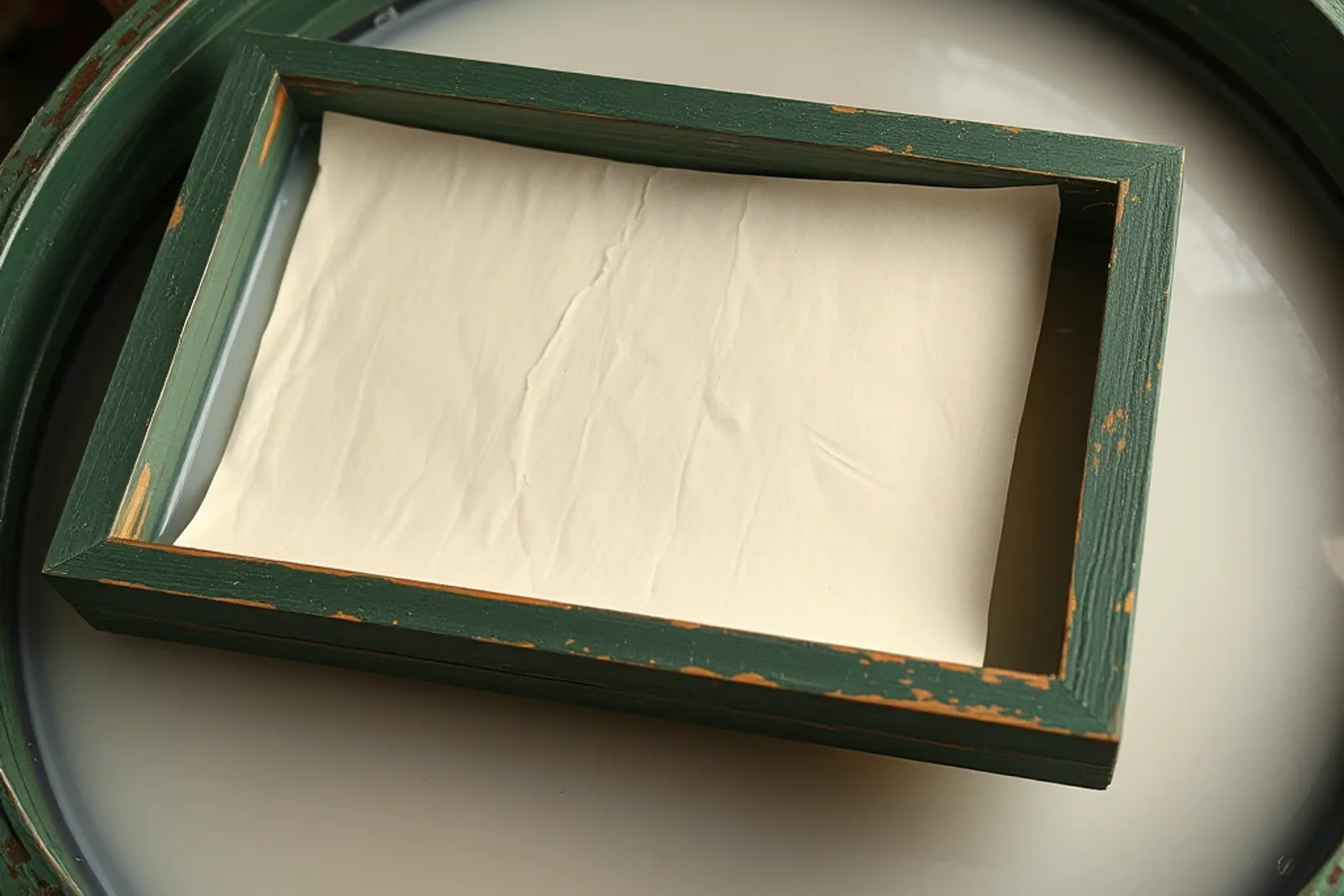
The museum explains a traditional process in which selected rags were broken down into pulp using water and mallets. A mould collected fibres from the vat, pressing removed more water, and drying completed the sheet. Following that sequence makes it easier to understand why thickness, edges and texture can retain evidence of the way paper was made.
The listed workshop invites participants to make a sheet from cellulose pulp. Watch how handling the mould affects the distribution of fibres, and ask what makes different papers suitable for writing or printing. The historical cycle also includes stages that require more time than a visit allows; these are explained rather than all being completed from beginning to end during a two-hour session.
From paper to print and binding
The programme also presents movable-type printing and bookbinding. Together, these subjects create a clear progression from making the surface to placing a mark on it and assembling pages. Travellers interested in notebooks, graphic design or books can use the workshop to connect an everyday finished object with the decisions and techniques behind it.
Workshops and a personalised product to keep are included; meals are not. Confirm the session language and the arrangements for your group when booking. If a particular printing technique or binding project matters to you, ask about it in advance. This introductory visit should not be treated as a promise of the same depth or finished project as a longer specialist course.
Meet in Subiaco, not central Rome
The meeting address is Via degli Opifici snc, 00028 Subiaco, and the activity ends at the same place. Save the voucher and the museum location before travelling. Viator places the product in its Rome category, but that does not mean a meeting point or collection service in the capital. The museum is housed at Mulino Carlani, reached by a final riverside walk.
Choose transport connections that leave time before the appointment, and check the return journey before setting out. Families can confirm age suitability and how the practical work is organised for children. The listing describes the venue as accessible, but access to public transport and the operating status of station lifts need separate checks if relevant to your journey.
Subiaco
How to get there
From the train station
Roma Termini
From Roma Termini take metro line B towards Rebibbia to Ponte Mammolo, then use the Cotral service to Subiaco. Check departures for your travel date on Cotral’s website. The museum gives approximately one hour for the bus journey and a walk of about 300 metres from Subiaco’s bus terminus along Via Carlo Alberto dalla Chiesa and the Aniene to Mulino Carlani, Via degli Opifici. Allow additional time for waiting and connections.
From the airport
Rome Fiumicino Leonardo da Vinci (FCO)
From the railway station inside the airport, take the Leonardo Express to Roma Termini; Trenitalia lists a nonstop journey of 32 minutes. Continue by metro B towards Rebibbia to Ponte Mammolo, Cotral bus to Subiaco and the final walk to the museum. Consult Trenitalia, ATAC and Cotral for the day’s services and leave room for luggage and changes.
Always check the meeting point on your voucher: it may vary by the option booked. Check timetables and connections again before travelling.
Before you go
- Check the chosen session’s availability, conditions and starting time on Viator; general museum opening hours are not a workshop reservation.
- Confirm language, group arrangements and any accessibility requirements before travelling.
- Ask how to carry the item you make, especially if you have further travel planned afterwards.
- If driving on a Saturday, read the museum’s specific access and parking directions.
VIATOR
Book this experience
Choose a date and check options, availability and booking conditions.
Viator affiliate link: we may earn a commission on bookings, at no extra cost to you. Details
Book on ViatorOpens the Viator websiteKeep exploring
Sources and further reading
Check availability, booking conditions and useful links to plan your visit.
- Details and availability · Viator affiliate link
- Borgo dei Cartai — Il museo e il ciclo di produzione della carta
- Borgo dei Cartai — Opificio, carta a mano e attività artigiane
- Borgo dei Cartai — Storia della cartiera di Subiaco
- Borgo dei Cartai — Indirizzo e percorso Cotral e pedonale
- Cotral — Ricerca degli orari per la data di viaggio
- ATAC — Mappa ufficiale metropolitana B e B1
- ATAC — Accessibilità e stato degli impianti nelle stazioni
- Trenitalia — Leonardo Express fra Fiumicino e Roma Termini
Report an errorOpens your email app: complete the message and send it yourself. You can also write directly to info@esperienzeguidate.it.